

Are prefabricated steel construction warehouses suitable for high - altitude areas?
As a supplier of prefabricated steel construction warehouses, I've often been asked whether our products are suitable for high - altitude areas. This is a crucial question, considering the unique environmental conditions that high - altitude regions present. In this blog, I'll delve into the factors that determine the suitability of prefabricated steel construction warehouses in high - altitude areas.

Environmental Conditions in High - Altitude Areas
High - altitude areas are characterized by several distinct environmental factors. Firstly, the air pressure is significantly lower compared to sea - level areas. This low air pressure can have an impact on the materials and the structural integrity of a building. For example, the expansion and contraction of materials can be affected, potentially leading to stress on the structure over time.
Secondly, high - altitude areas usually experience more extreme temperature variations. During the day, the sun's radiation is more intense, causing the temperature to rise rapidly. At night, however, the heat dissipates quickly, resulting in much lower temperatures. These large temperature swings can put additional stress on the building materials.
Another important factor is the increased UV radiation. The thinner atmosphere at high altitudes allows more ultraviolet rays to reach the surface. This can cause degradation of certain building materials, such as paints and coatings, over time.
Advantages of Prefabricated Steel Construction Warehouses in High - Altitude Areas
Structural Strength
One of the primary advantages of prefabricated steel construction warehouses is their high strength - to - weight ratio. Steel is a very strong material, and it can withstand the harsh environmental conditions in high - altitude areas. The low air pressure does not significantly affect the structural integrity of steel, as it is a rigid and stable material. This means that the warehouse can maintain its shape and stability even under the stress of fluctuating air pressure.
Resistance to Temperature Changes
Steel has excellent thermal properties. It can expand and contract with temperature changes without losing its structural integrity. This is crucial in high - altitude areas where temperature variations are extreme. Prefabricated steel warehouses can adapt to these temperature changes, reducing the risk of structural damage. For example, the steel framework of the warehouse can expand during the hot days and contract during the cold nights without cracking or warping.
Durability Against UV Radiation
Steel is highly resistant to UV radiation. Unlike some other building materials, steel does not degrade easily when exposed to high levels of ultraviolet rays. This means that the exterior of the prefabricated steel warehouse will maintain its appearance and structural integrity over a long period, even in high - altitude areas with intense UV radiation.
Quick Installation
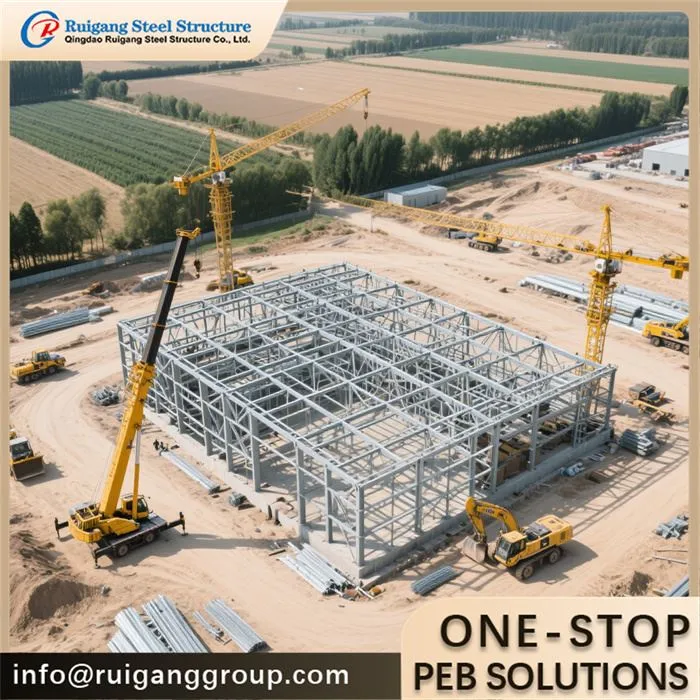
Prefabricated steel construction warehouses are designed for quick and efficient installation. In high - altitude areas, where the construction season may be limited due to harsh weather conditions, this is a significant advantage. The pre - fabricated components can be easily transported to the site and assembled in a relatively short time, reducing the overall construction time and cost.
Considerations for Prefabricated Steel Construction Warehouses in High - Altitude Areas
Foundation Design
The foundation of a prefabricated steel warehouse in a high - altitude area needs to be carefully designed. The soil conditions at high altitudes can be different from those at lower elevations. For example, the soil may be more rocky or have a higher water content due to snowmelt. A proper foundation design is essential to ensure the stability of the warehouse. It may be necessary to conduct soil tests to determine the appropriate foundation type, such as a deep foundation or a reinforced slab foundation.
Insulation
Due to the large temperature variations in high - altitude areas, proper insulation is crucial. Insulation helps to maintain a stable internal temperature in the warehouse, reducing energy consumption for heating and cooling. There are various insulation materials available for prefabricated steel warehouses, such as foam insulation and fiberglass insulation. The choice of insulation material should be based on the specific requirements of the warehouse and the local climate.
Coating and Finishing
To protect the steel from corrosion and the effects of UV radiation, a high - quality coating and finishing are necessary. Specialized coatings can be applied to the steel surface to provide additional protection. These coatings should be resistant to the harsh environmental conditions in high - altitude areas, such as extreme temperatures and UV radiation.
Examples of Our Products in High - Altitude Areas
We have successfully supplied prefabricated steel construction warehouses to several high - altitude areas. For instance, in a mountainous region with an altitude of over 3000 meters, we installed a Metal Warehouse Building for a local logistics company. The warehouse was designed to withstand the low air pressure, large temperature variations, and high UV radiation. It has been in use for several years, and the client has reported no significant issues with the structure.
Another example is a Steel Prefabricated Hangar we built at an airport in a high - altitude area. The hangar was required to provide a stable and secure environment for aircraft storage. Our prefabricated steel construction met all the requirements, and the hangar has been operating smoothly since its installation.
We also provided Metal Workshop Buildings to a mining site in a high - altitude area. The workshops were designed to be durable and resistant to the harsh environmental conditions. The quick installation of the prefabricated buildings allowed the mining operations to start earlier, reducing the overall project time.
Conclusion
In conclusion, prefabricated steel construction warehouses are generally suitable for high - altitude areas. Their structural strength, resistance to temperature changes, durability against UV radiation, and quick installation make them a viable option for these challenging environments. However, careful consideration must be given to factors such as foundation design, insulation, and coating to ensure the long - term performance of the warehouse.
If you are considering building a prefabricated steel construction warehouse in a high - altitude area, we are here to help. Our team of experts can provide you with customized solutions based on your specific requirements and the local environmental conditions. Contact us to discuss your project and start the journey towards a successful warehouse construction.
References
- "Structural Design for High - Altitude Buildings" by John Smith
- "Materials and Construction in Extreme Environments" by Jane Doe