


1. Structural Performance
1.1 Strength and Span
Steel structures have high strength. They can bear large loads with relatively small - sized components, enabling the creation of large - span spaces. There can be few or no columns inside, which is convenient for large - scale stacking of goods and mechanical handling. For example, in common large - span logistics steel structure warehouses, the span can reach over 30 meters. In contrast, due to the material characteristics of concrete, it is more difficult to achieve large spans. Concrete warehouses require more columns for support, which affects the spatial layout and utilization efficiency.
1.2 Seismic Performance
Steel has good toughness. During an earthquake, a steel structure can absorb energy through its own deformation, reducing the risk of structural damage and ensuring the safety of goods and personnel in the warehouse. This makes it suitable for earthquake - prone areas. Concrete structures have a large self - weight, resulting in a large seismic response, and their seismic performance is relatively weak.
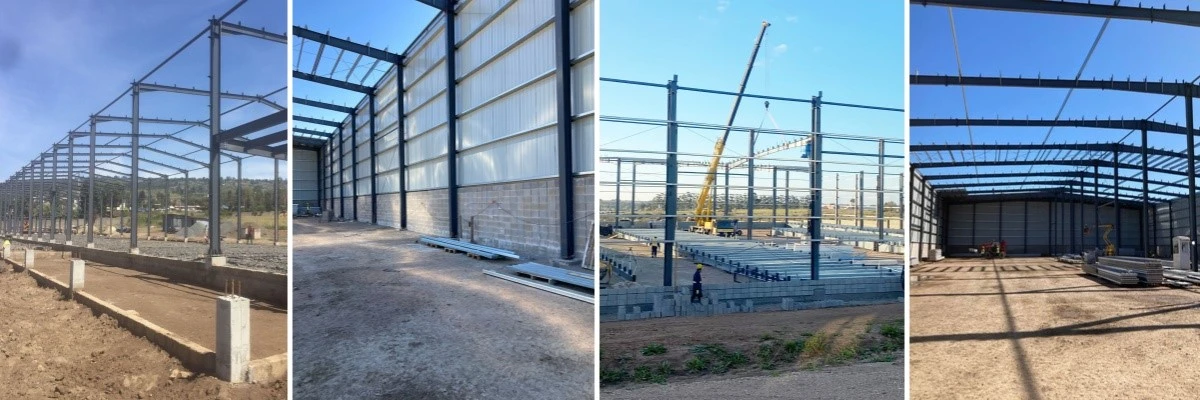
2. Construction
2.1 Construction Period
Steel structure components can be pre - fabricated in the factory and then quickly assembled on - site, so the construction speed is fast. For warehouses of the same scale, the construction period of a steel structure warehouse is 30% - 50% shorter than that of a concrete warehouse, allowing it to be put into use more quickly. Concrete warehouses need on - site pouring and a long curing time, resulting in a longer overall construction period.
2.2 Construction Flexibility
Steel structures are easy to process and shape. The layout and shape of the warehouse can be flexibly designed according to different needs, adapting to various goods storage and logistics operation processes. Once a concrete structure is formed, it is difficult and costly to modify later.
3. Construction Costs
3.1 Initial Cost
The price of steel is relatively high, so the initial material cost of a steel structure warehouse may be higher than that of a concrete warehouse. However, due to the large self - weight of concrete warehouses, the requirements for the foundation are high, which may increase the foundation cost.
3.2 Comprehensive Cost
The short construction period of steel structure buildings can reduce indirect costs such as labor and equipment rental. In the long run, the comprehensive cost may have more advantages. At the same time, after the steel structure building is demolished, the materials can be recycled, and the residual value is high. After the demolition of a concrete building, there is a large amount of construction waste, and the treatment cost is high.
4. Durability and Maintenance
4.1 Durability
Although steel has high strength, it is prone to rust and corrosion, so anti - corrosion treatment is necessary. Through reasonable design and anti - corrosion processes, the service life of a steel structure warehouse can reach 50 years or even longer. Concrete structures have good durability, but over time, due to environmental erosion, problems such as cracking and steel bar corrosion may occur.
4.2 Maintenance Cost
Steel structure warehouses need to be regularly inspected for the anti - corrosion coating, and problems should be repaired in a timely manner. The maintenance cost is relatively concentrated on surface anti - corrosion. If there are structural problems in a concrete warehouse, the repair is complex and costly.
5. Environmental Protection and Energy Conservation
5.1 Material Environmental Friendliness
Steel can be 100% recycled, which is in line with the concept of sustainable development. And less construction waste is generated during construction. The production of concrete consumes a large amount of energy, and waste concrete is difficult to recycle.
5.2 Thermal Insulation
Concrete has good thermal inertia, and its thermal insulation performance is relatively stable. Steel structures have a large thermal conductivity coefficient and need to use high - efficiency thermal insulation materials to make up for it. However, with the development of technology, new thermal insulation materials can effectively improve the thermal insulation performance of steel structure warehouses.