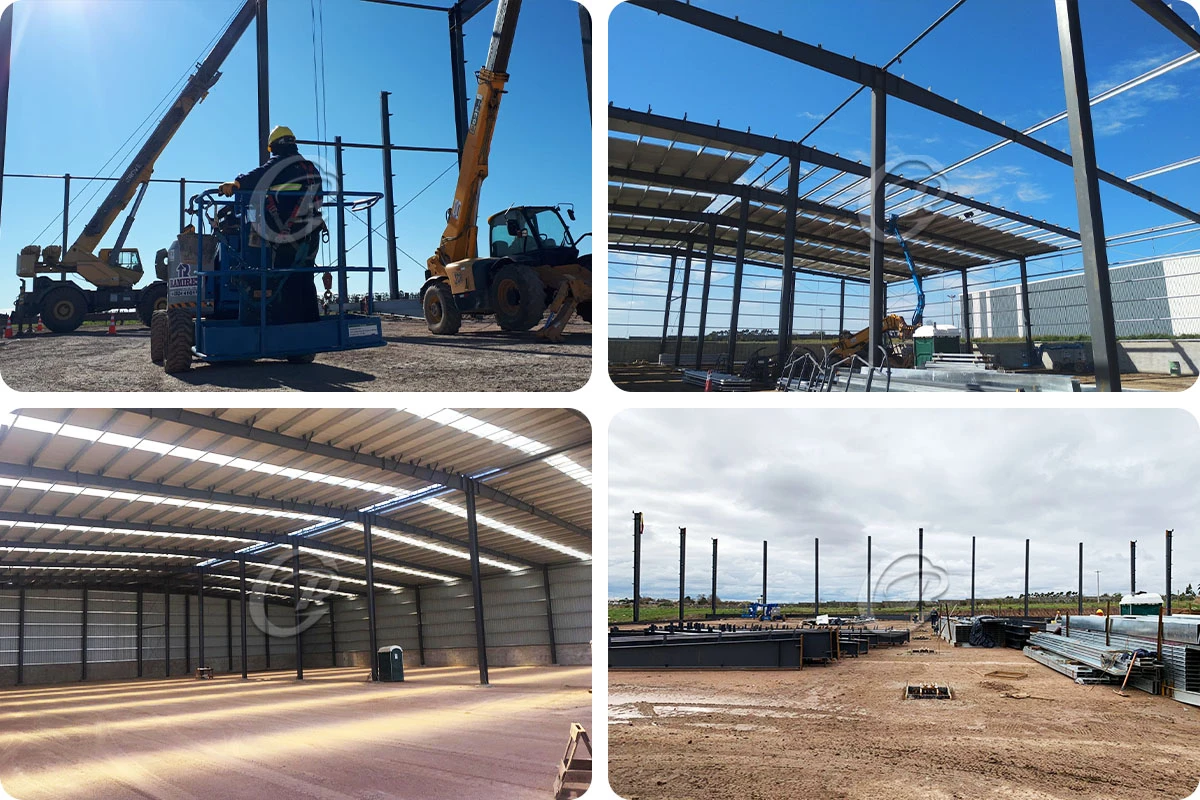
In the field of modern industrial architecture, steel structures have gradually become the mainstream form of building structures due to their unique advantages, demonstrating prominent characteristics in many aspects:
1. Efficient Industrialized Production and Rapid Construction
Steel structures feature a high degree of factory - based production. Different from traditional brick - and - mortar and concrete structures, the material processing and installation of steel structures can be integrated. In a factory environment, various steel - structure components can be pre - fabricated precisely and in large quantities, and then transported to the construction site. The on - site work mainly involves assembling and installing these pre - fabricated components according to design requirements, using appropriate connection methods such as welding and bolt - connection. This model significantly speeds up the construction process and greatly shortens the project duration. Compared with traditional construction methods, steel - structure buildings can be completed and put into use earlier, saving time costs for enterprises and enabling them to obtain economic benefits more quickly.
2. Excellent Integration of Function and Aesthetics
Steel structures demonstrate strong functionality and high aesthetics in industrial buildings. They break the limitations of traditional building structures, offering greater flexibility in architectural design. Leveraging the properties of steel, architects can skillfully use slashes and curves in their designs to create more novel, unique, and aesthetically pleasing building images. This perfect combination of function and aesthetics not only meets the space and layout requirements of industrial production but also enhances the overall quality and visual effect of the building, freeing industrial buildings from the traditional rigid image.

3. Wide Applicability and Strong Plasticity
Steel structures, with their advantages of light weight, good toughness, and high compressive strength, perform outstandingly in the construction of various buildings and have an extremely wide range of applications. Especially in the construction of large - span buildings, steel structures have advantages that traditional construction methods cannot match. For example, in buildings such as theaters, airports, and stadiums, which require large spaces, if traditional structures are used, a high - density of columns is often needed for support, which seriously reduces the space utilization rate. However, steel structures can create large - span spaces by virtue of their own properties, effectively reducing the number of columns in the building space and significantly improving the space utilization rate. In addition, the good welding performance and extrusion - resistance of steel make the design and construction of new - type steel - structure buildings possible. The famous Eiffel Tower in France is a classic example of the plasticity of steel structures, demonstrating the unlimited potential of steel structures in creating unique architectural forms.
In conclusion, steel structures, with these prominent characteristics, have gradually replaced traditional building structures and become the core choice for modern industrial buildings. This not only reduces unnecessary consumption of manpower, material resources, and financial resources for enterprises but also fundamentally improves the economic and social benefits of enterprises, laying a solid foundation for the sustainable development of the industrial field.